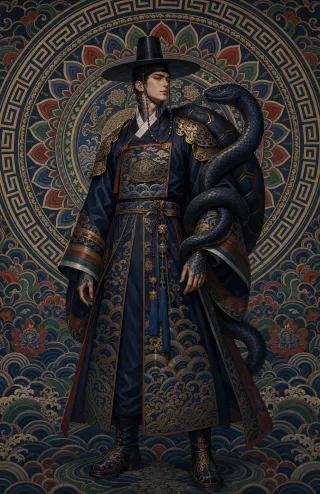
Yin-Yang & Five Elements — Saju Basics
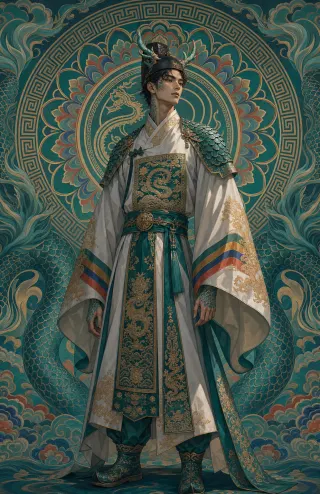
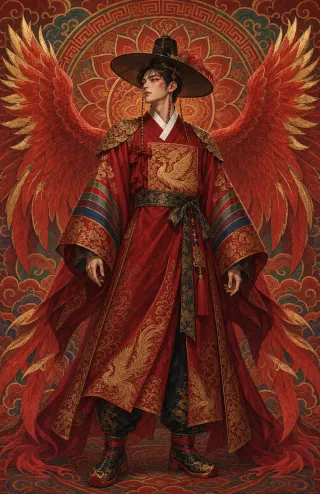
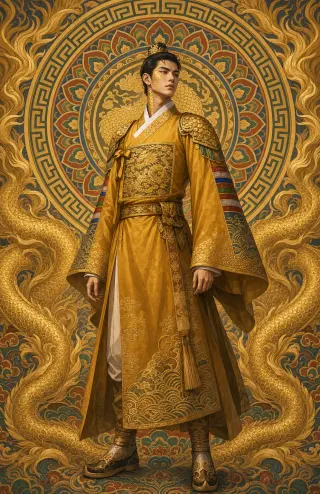
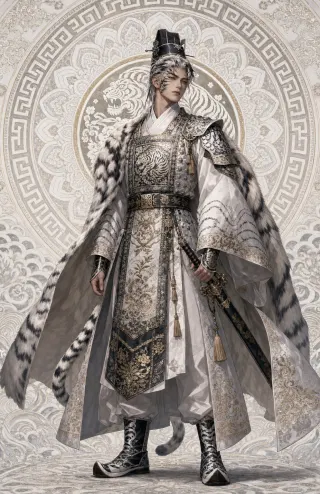
The Osindang binder — all five guardians
Saju (四柱, Four Pillars of Destiny) expresses the year, month, day, and hour of birth as four pairs of characters — each pair consisting of a Heavenly Stem (天干) and an Earthly Branch (地支) — for a total of eight characters (八字, Eight Characters). The balance of Yin-Yang (陰陽) and Five Elements (五行) within these eight characters is the foundation of Saju interpretation. Below we explore each concept step by step.
What Is Yin-Yang (陰陽)?
Yin-Yang is the core principle of Eastern philosophy that views all phenomena through two complementary forces. Yang (陽) represents brightness, activity, heat, and outward energy, while Yin (陰) represents darkness, receptivity, cold, and inward energy. In Saju, the ten Heavenly Stems and twelve Earthly Branches alternate between Yang and Yin. The ratio of Yang to Yin characters in a person's chart forms the first axis of personality interpretation. Yin and Yang are not opposites in conflict — they complement and circulate through each other, and neither is inherently better than the other.
The Five Elements (五行) — Wood, Fire, Earth, Metal, Water
The Five Elements classify natural energy into five phases. Wood (木) symbolizes growth and trees, Fire (火) passion and flame, Earth (土) stability and the ground, Metal (金) decisiveness and refinement, and Water (水) wisdom and flow. Each of the eight characters in a Saju chart belongs to one of these five elements. The distribution of elements — which ones are abundant and which are scarce — serves as the key indicator for understanding personality tendencies. The five elements do not exist independently; they are linked through generating and controlling cycles.
The Generating Cycle (相生) — Nurturing Flow
The generating cycle describes how one element produces and nurtures the next: Wood → Fire → Earth → Metal → Water → Wood. Wood fuels Fire; Fire creates ash that becomes Earth; Earth harbors Metal within it; Metal surfaces condense Water; and Water nourishes Wood. In Saju, this cycle explains how elements support and energize one another.
The Controlling Cycle (相剋) — Balancing Force
The controlling (overcoming) cycle describes how one element restrains another: Wood penetrates Earth (roots break soil), Earth dams Water, Water extinguishes Fire, Fire melts Metal, and Metal cuts Wood. Far from being a negative relationship, the controlling cycle is nature's regulator — it prevents any single element from becoming overwhelmingly dominant and maintains equilibrium within the chart.
Heavenly Stems (天干) & Earthly Branches (地支)
The ten Heavenly Stems — Gap, Eul, Byeong, Jeong, Mu, Gi, Gyeong, Sin, Im, Gye (甲乙丙丁戊己庚辛壬癸) — represent celestial energy. The twelve Earthly Branches — Ja, Chuk, In, Myo, Jin, Sa, O, Mi, Sin, Yu, Sul, Hae (子丑寅卯辰巳午未申酉戌亥) — represent terrestrial energy and correspond to the twelve zodiac animals. One Stem paired with one Branch forms a single pillar, and these pairs cycle through 60 unique combinations known as the Sexagenary Cycle (六十甲子, 60 Gapja). Saju assigns one such pair to each of the four time units — year, month, day, and hour — to build the Four Pillars.
The Four Pillars & Eight Characters (四柱八字) — A Map in Eight Letters
Each of the four pillars carries a distinct traditional meaning. The Year Pillar reflects ancestral influence and early environment; the Month Pillar represents parents and upbringing; the Day Pillar reveals the core self (the Day Stem is "me"); and the Hour Pillar symbolizes children and later life. Analyzing the weighted Five Element distribution across these eight characters reveals which element dominates and how strong or weak the chart is — the basis for modern Saju personality typing. Because the calculation is purely deterministic, the same birth data always yields the same result.